
Resources
Reviews
October 27, 2026
The European Reformations
by Dr. Steve Mundfrom
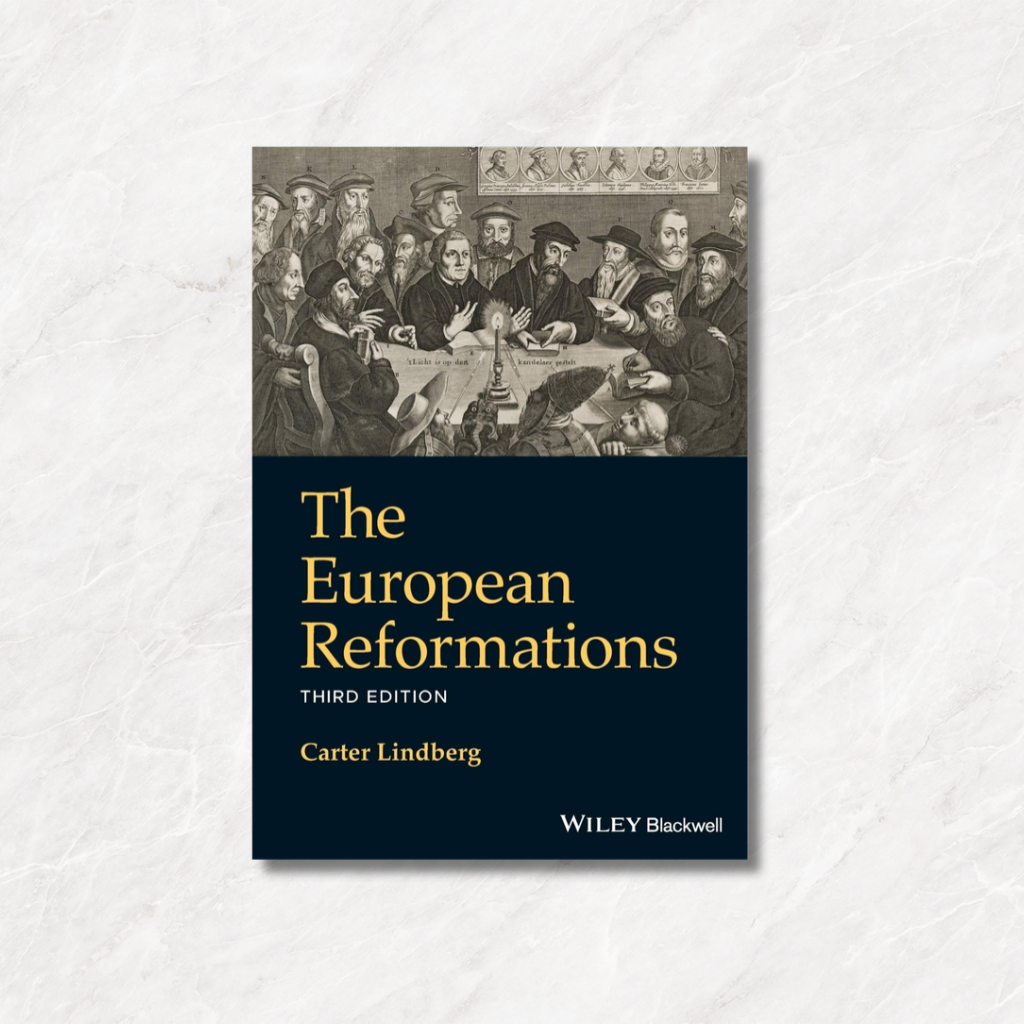
For the last few years, I have had a ton of fun teaching history courses at the Free Lutheran Schools. My courses have included surveys of Church History in both the Bible College and the Seminary, the History of Missions, and my favorite, Reformation Studies. While most of my other teaching duties have involved systematic theology courses, now that I’m teaching history courses I have “needed” to invest in a new bookshelf and fill it with some good books from that area of scholarship—and there are many options. One exceptionally helpful resource is The European Reformations by Carter Lindberg.
Lindberg’s The European Reformations was first published in 1996, but with the third edition released in 2021, it remains a useful and up-to-date resource for study of this important era of Christian history that is especially dear to Lutherans. As the title indicates, this book offers way more than a biography of Martin Luther, and there is much to learn about the whole movement for church reform beyond Luther’s Germany. Along with several chapters on the Reformation in Germany, Lindberg provides chapters on Zwingli in Zurich, Calvin in Geneva, as well as the Reformation in England other areas of Europe. The radical reform movement and the Catholic response are covered well, following the whole story all the way through the Thirty Years’ War. Lindberg writes with expert insight into Reformation history, but does not write for experts. People and places are explained when they are introduced, and unfamiliar concepts are related to twenty-first century American life. Still, even those quite familiar with the story of the Reformation will find plenty to interest them in Lindberg’s analysis.
One thing I especially appreciated about The European Reformations is Lindberg’s skillful weaving together of the story of the Reformation with its theological significance. Few books unite both topics as well as this one. For example, while telling the history of Luther’s early life leading up to his posting of the 95 Theses in October of 1517, the Romanist teaching of penance and performance-based salvation is explained particularly well. Lindberg introduces readers to the dictum of medieval theologians, “Do what lies within you,” as an important part of a salvation message that failed to give assurance to the church in which the very sensitive Martin Luther grew up. Lindberg writes:
According to Thomas Aquinas, grace does not do away with nature but completes it. So the famous scholastic phrase facere quod in se est (do what lies within you) means that salvation is a process that takes place within us as we perfect ourselves. Put another way, we become righteous before God as we do righteous acts, as we do good works, but to an anxious and insecure age, the question became: “How do I know if I have done my best?” (51)
Lindberg is equally clear in explaining the connection between Luther’s discovery of the Gospel and his teaching of justification, bringing history and theology together. “Luther now came to realize,” says Lindberg, “that we are not to think of the righteousness of God in the active sense (that we must become righteous like God) but rather in the passive sense (that God gives us his righteousness). The good news, Luther discovered, is that justification is not what the sinner achieves but what the sinner receives” (56). This is the kind of summary that one finds often throughout the book and which makes it so helpful.
As a scholar trained in Lutheran schools, Lindberg treats the theology of the Reformation with clear understanding and sympathy—not treating the Reformers with any condescension. Unlike much present-day writing about the Reformation from a secularized standpoint, Lindberg does not apologize for the worldview and beliefs of late medieval Christians. He writes favorably about their faith in God and His word or their fears concerning hell and the devil, while carefully distinguishing these from superstitions about the natural world. I found this clarity especially refreshing.
I encourage you to celebrate this Reformation season with a good resource about our blessed heritage, and The European Reformations is a great place to look.
Dr. Steve Mundfrom is a professor of Systematic Theology and Church History at the Free Lutheran Bible College and Seminary.
The European Reformations
For the last few years, I have had a ton of fun teaching history courses at the Free Lutheran Schools.…

Adapting Curriculum for the Family
As a busy homeschooling mom of six, finding materials that both align with our Christian beliefs and meet our educational…
“I Believe; Lord, Use Me to Help Others Believe.”– Discernment and Discipleship
The foundational setting for faith strengthening and making disciples is everyday life in our families. An informal setting does not…