
Resources
Articles
August 31, 2026
“I Believe; Lord, Use Me to Help Others Believe.”– Discernment and Discipleship
by Marian Christopherson
Adapted from Marian Christopherson’s WMF Session at the 2026 AFLC Annual Conference, Part 3
The foundational setting for faith strengthening and making disciples is everyday life in our families. An informal setting does not mean unintentional teaching. Wherever we are, whatever we are doing, make disciples. Teach, train and equip. While planting a tree, we can talk about the one true God, the Creator of the heavens and the earth and all that is in them, and the sustainer of life. While washing dishes, we can talk about how our hearts need to be cleansed from sin every day, just like dishes need to be cleaned every day. We can teach daily repentance and faith. As we go about the regular, menial, ordinary tasks of our day, we teach theology and discernment.
Romans 12:2 instructs us, “Do not be conformed to this world, but be transformed by the renewal of your mind, that by testing you may discern what is the will of God, what is good and acceptable and perfect” (ESV). Hillary Morgan Ferrer in Mama Bear Apologetics encourages us, “A mature, informed, discerning worldview does not need to fear the false messages that this world churns out if it has already been trained to identify which aspects to reject.”[1]
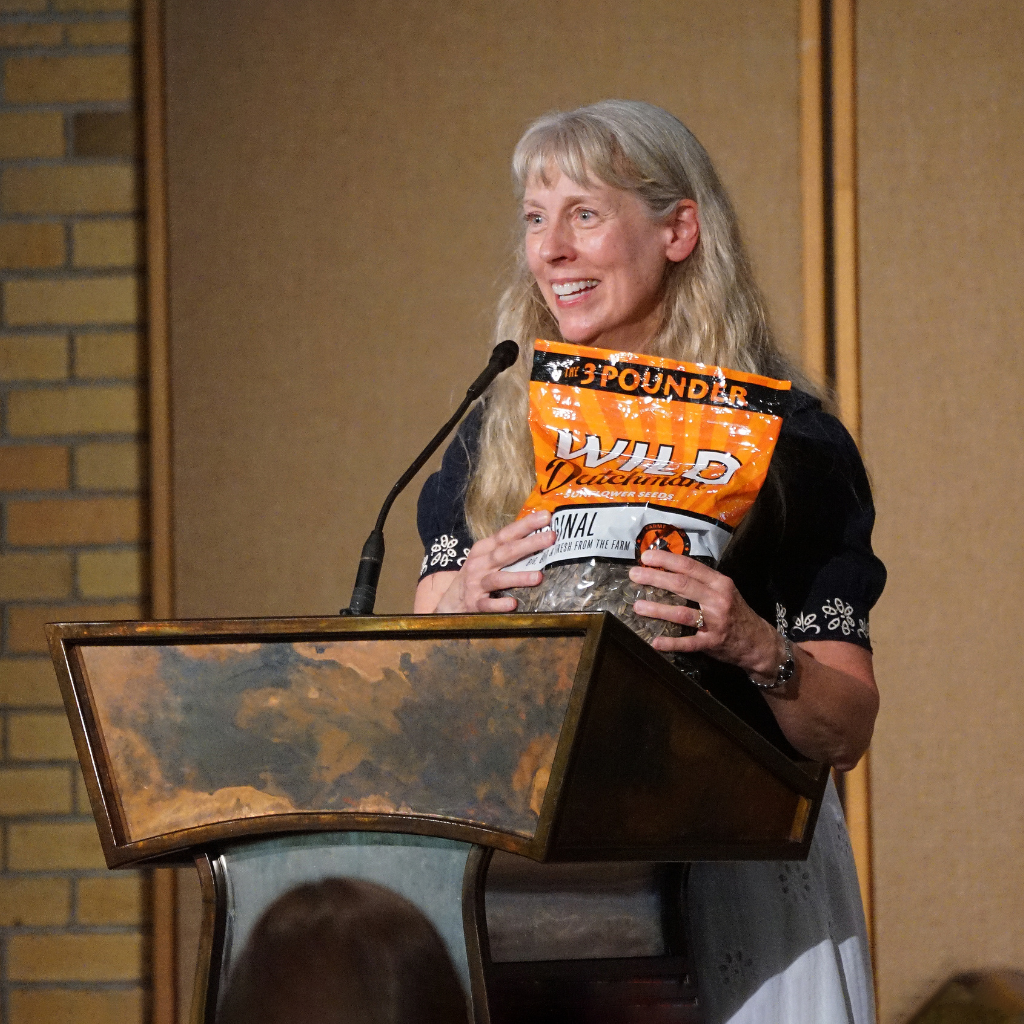
My brother, Mark, taught me a very practical skill when I was a kid growing up on the farm. Though to avoid gaining a reputation for crudeness, I am choosing not to demonstrate today, I assure you that I am highly skilled in it, having mastered it in my teens—the art of chew and spit. Some of you know what I’m talking about. You take a handful of unshelled sunflower seeds and stuff them in your mouth, skillfully positioning one seed the long way between your back teeth so that you can crack it on the fault line, holding it in place with your tongue. Bite down and crack it open, separating the husk halves with your tongue and teeth. Then chew the nutritious kernel and spit out the husk. Repeat until you’ve followed the procedure for all the seeds in your mouth. Then take another handful and do it all over again. It’s a process of chewing what is good and nutritious, but sifting and spitting out what will not be beneficial. It takes practice to refine the process, but soon it becomes automatic, without even thinking about it, you chew and spit, chew and spit. Discernment is giving children the skills to chew and spit—to recognize truth, reject falsehood, and keep what is good.[2]
But sometimes it’s hard to tell what is good and right. Lies are often wrapped in attractive packages! Hillary Morgan Ferrer suggests using the ROAR[3] method:
- Recognize the message. What is being communicated?
- Offer discernment. Affirm the good and reject the bad.
- Argue for a healthier approach. What does God’s Truth say?
- Reinforce through discussion, discipleship, and prayer.
Parish Education board member Leeanna Lunn demonstrates this concept through a skit with her boys, Erik and Caedmon. Can you pick out each aspect of the ROAR method?
SKIT: The Selection [LINK]
Notice how Leeanna guided her sons in recognizing the messages in the movie, then she helped them to see what was good and bad, she challenged them to grapple with moral issues (of language and principles), she guided them to think about better options, and reinforced biblical principles through loving discussion.
Knowledge of God provides a universal framework. “The fear of the LORD is the beginning of wisdom” (Psalm 111:10; Proverbs 1:7; 9:10; 15:33). Nancy Pearcey asks, “How can Christians rightly handle the Word of truth (2 Tim. 2:15) if they do not hold a biblical view of truth itself?”[4]
Leeanna is helping her children gain wisdom to understand what Truth is and to be able to recognize it and articulate it. This is also an important part of what we do through education in our congregations. It might seem overwhelming, and we may feel ill-equipped to provide answers, but as we study God’s Word and observe what is happening in culture around us, God will give us wisdom. I’ve written two other dramatizations for teaching purposes to help us explore two specific topics.
Identity is one of the significant challenges bringing confusion in our modern culture. Let’s watch this scene in a high school Sunday school class.
SKIT: Identity Anchored in Truth [LINK]
Notice how the teacher attempted to lovingly answer the students’ questions and guide them into God’s Truth:
- Feelings are real, but they are not the ultimate source of truth.
- Our identity comes from God, not from emotions, achievements, cultural trends, or other people’s opinions.
- We should speak the truth in love and treat others with respect, even if we disagree with them.
Other opportunities to live out our faith are with our neighbors and community, with friends and coworkers, or other family relationships such as grandparents with grandchildren. We all likely have neighbors in our community or coworkers who are not Christian. Sometimes it’s easier to avoid them, to live our lives in a bubble where we don’t have to deal with them or with their issues. But God calls us to be in the world, not of the world. I wonder how often we miss out on being the presence of Christ.
Let’s watch Rachel and Gwen, two new neighbors. This could be you and your neighbor.
SKIT: More Than Religion [LINK]
Notice how the Christian neighbor exhibited grace, patience, and good humor, not allowing herself to be annoyed by the sassy neighbor who made a few jabs. Also notice, it was the non-Christian who had invited a neighbor into her home. Sometimes non-Christian neighbors are more neighborly than Christians.
I often feel like I need to have a well-articulated speech prepared on any topic that might come up. I don’t feel equipped. But we should not be afraid. Rosaria Butterfield was a liberal professor at Syracuse University in New York, identifying as a lesbian, specializing in queer theory and gay and lesbian studies, and highly invested in LGBTQ activism. Through an unlikely friendship with a pastor and his wife who practiced acts of hospitality and lovingkindness, she became a Christian, married a pastor, and has written several books, including The Gospel Comes with a House Key. God can do amazing things! In my own life, through years of simple acts of hospitality in our home and many everyday conversations with me and my husband, our neighbor who was raised Mormon became a Christian, was baptized, and continues to grow in her faith.
Our conversations with our neighbors and our presence in our communities matter. People are looking for answers to spiritual questions, but they are also trying to make sense out of their lives—their identity, purpose, work, pain and suffering, the future. They deal with many of the same challenges and fears we do every day. The difference is that we have Hope. We have the Truth. The Christian faith speaks to all of these realities and provides the framework for understanding life and the world around us. Can you think of one person God might be leading you to build a relationship with and what questions they might have?
Christianity is not just about religion. Christianity is Total Truth, not religious truth. Christianity is Total Truth, relevant and applicable to ALL of life—my life and the lives of my neighbors. God’s gift of faith frees us to live out all our stations, vocations, and occupations within culture, loving and serving our neighbors (Romans 12:1-2; 2 Corinthians 5:14-15). May the Light of Jesus shine forth through each one of us.
PRAYER:
Lord, I believe; help my unbelief.
Lord, I believe; use me to help others believe too.
In Jesus’ Name, Amen.
Marian Christopherson is the director of AFLC Parish Education.
[1] Hillary Morgan Ferrer, Mama Bear Apologetics (Eugene, OR: Harvest House Publishers, 2019), 51.
[2] Ferrer, Mama Bear Apologetics, 53.
[3] Ferrer, Mama Bear Apologetics, 54-60.
[4] Nancy Pearcey, Saving Leonardo (Nashville, TN: B&H Publishing Group, 2017), 31.
Adapting Curriculum for the Family
As a busy homeschooling mom of six, finding materials that both align with our Christian beliefs and meet our educational…
“I Believe; Lord, Use Me to Help Others Believe.”– Discernment and Discipleship
The foundational setting for faith strengthening and making disciples is everyday life in our families. An informal setting does not…
“I Believe. Lord, Use Me to Help Others Believe.”— Always Be Ready
“But sanctify Christ as Lord in your hearts, always being ready to make a defense to everyone who asks you to give an account for…